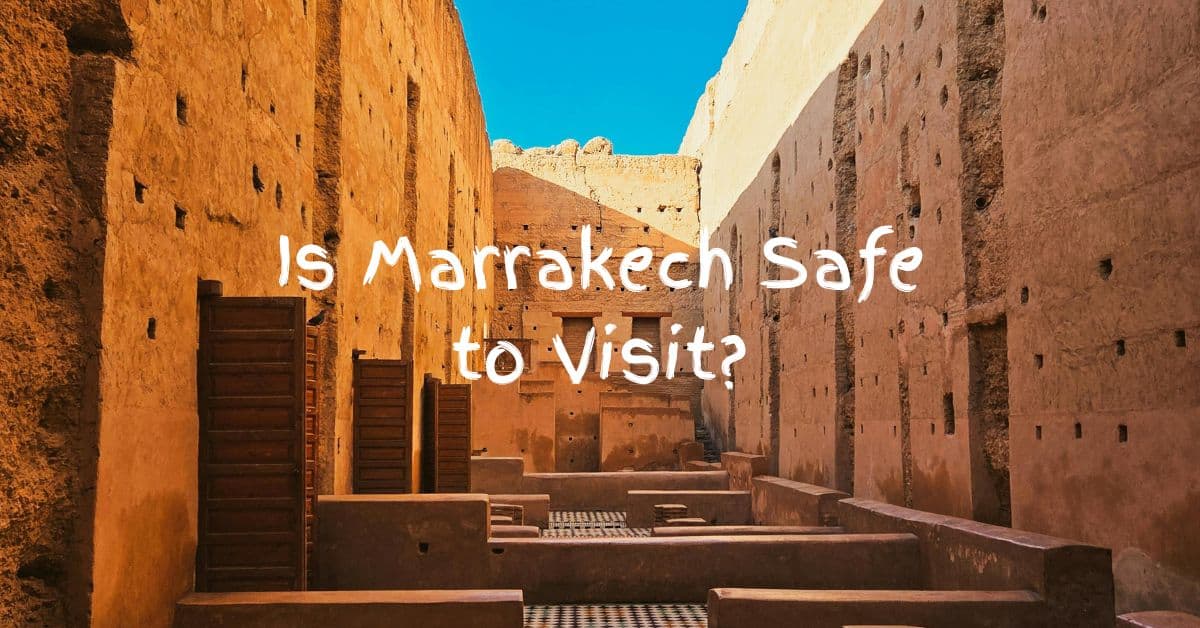
Is Marrakech Safe to Visit?
Marrakech, with its chaotic souks, stunning palaces, and interesting culture, has become a must-visit destination for travellers worldwide. But if you’re thinking about booking a trip, you might also be wondering: Is Marrakech safe?
It’s a fair question. Stories of scams, hectic market stalls and unfamiliar customs can make the idea of exploring Marrakech feel intimidating. The good news is that, yes, Marrakech is safe to visit – as long as you take a few sensible precautions.
This guide will walk you through what to expect, how to stay safe in the busy streets, and tips for a smooth, enjoyable trip without unnecessary worries.
Safety in Marrakech
Like many popular tourist cities, Marrakech is generally safe, but it’s not without its risks. The main safety concerns are petty crime, such as pickpocketing and scams aimed at visitors. Violent crime is rare, especially in tourist areas, but it’s wise to stay alert.
Most visitors enjoy Marrakech without any issues by simply using common sense, staying aware of their surroundings, and respecting local customs.
What are the biggest concerns?
Pickpocketing and bag snatching: Crowded souks and busy squares are hotspots for petty theft. A sly hand can easily find your phone in your back pocket or some money from a zipped bag.
Scams: Unfortunately, scams are pretty common in Marrakech. Some to look out for include: overcharging by taxis, “official” guides who suddenly demand payment, or locals offering unsolicited “help” and then asking for tips.
Cultural misunderstandings: Sometimes, what’s normal behaviour for locals can catch visitors off guard, especially regarding social interactions and dress codes.
Staying Safe in Marrakech’s Medina and Souks
Marrakech’s Medina and the souks are the busiest part of the city, and with narrow streets jammed with motorbikes, donkey carts, people and stalls that all look identical, it can be very easy to take a wrong turn and end up walking around in circles.
Pickpocketing
Unfortunately, the busy and chaotic atmosphere does give rise to some petty theft, with thieves targeting unsuspecting tourists the most.
While walking in amongst the hustle and bustle of the souks, you must keep a tight grasp on your belongings, including zipped bags (thieves can be very sneaky in Marrakech!).
One of my favourite travel tips for keeping my valuables safe from pickpockets is to put a reusable cable tie through my zips on my backpack and shoulder bag. This stops quick access to things like my wallet, phone and passport!
Local interactions
Another issue that a lot of tourists report in the souks is being verbally harassed by shopkeepers. This is all part of the local culture, so please do not take offence!
Stall owners are desperately trying to make a living, and so shouting at passersby to come and take a look inside their shops is the number one way that they can drum up business – do not take it personally!
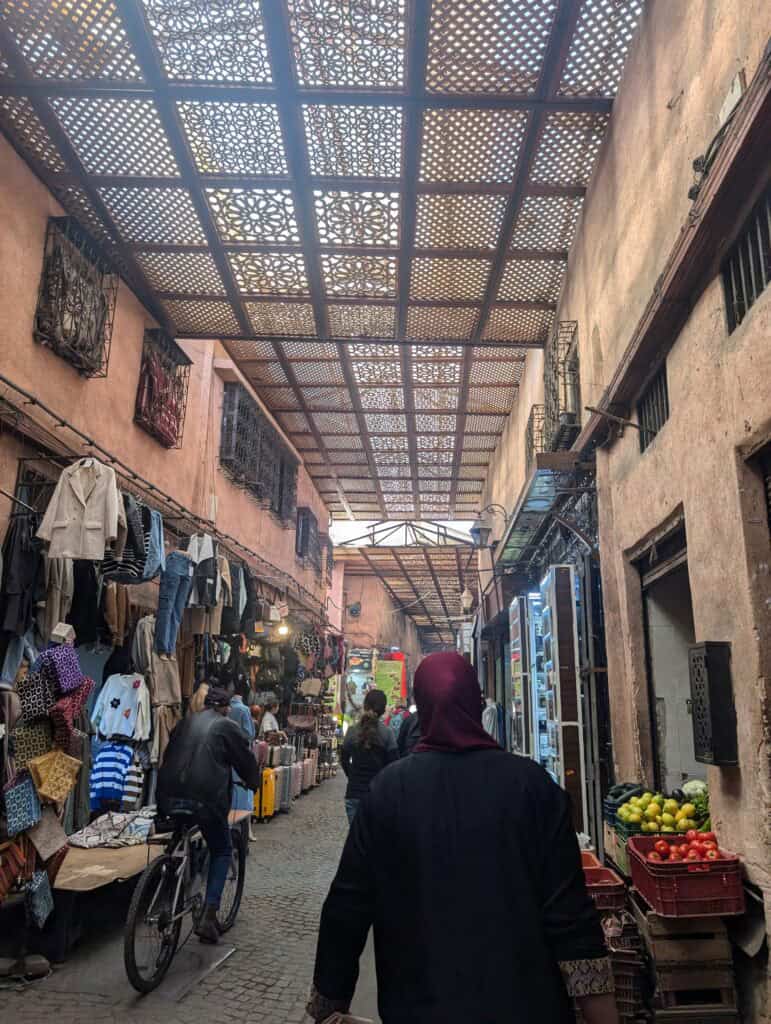
The vast majority of the time, the locals do not mean any harm to tourists and are certainly not trying to scare you; if anything, they’re trying to be as friendly as possible to entice you to buy their goods.
The souks after dark
As with most countries, the most dangerous time to be a tourist is at night. That being said, however, I have never felt more unsafe after dark in Marrakech than during the day.
Marrakech doesn’t really settle down too quickly after dark; in fact, it actually tends to liven up a bit with street performers, restaurants and stalls still causing a ruckus late into the night.
If you’re exploring the city after dark, however, it’s best to keep to well-lit and busy areas. Try not to venture too far away from the crowds on your own and make sure you know where you are going without needing to check your phone too often for directions.
Animals in Marrakech
You’ll see plenty of animals in Marrakech, particularly cats and dogs roaming the streets, as well as working animals like donkeys in the Medina. Stray cats are everywhere and generally keep to themselves, but it’s best not to pet unfamiliar animals.
Rabies does exist in Morocco, so while vaccines aren’t essential for most short trips, you should avoid contact with stray animals and seek medical advice quickly if you’re bitten or scratched.
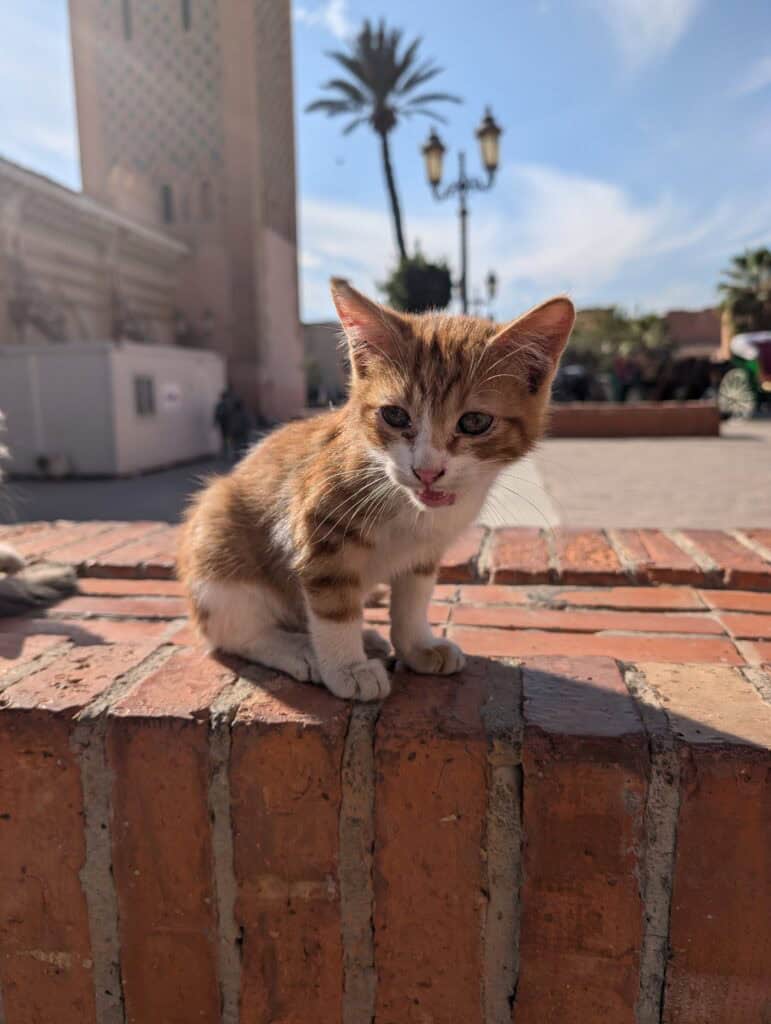
In busy areas like Jemaa el-Fnaa, you may also see performers with snakes or monkeys. It’s best to avoid these attractions altogether – both for your safety and the welfare of the animals. Snakes and monkeys can bite, and the animals are often poorly treated.
If you see donkeys or horses working in the Medina, many are well cared for, but conditions can vary, so it’s worth being mindful of how animals are treated and avoiding activities that don’t seem ethical.
Earthquakes in Marrakech
Earthquakes can happen in Morocco, but they aren’t something most travellers need to worry about on a short visit.
The most significant recent event was in September 2023, when a powerful magnitude 6.8 earthquake struck the Atlas Mountains about 72 km southwest of Marrakech, causing damage in parts of the city and surrounding villages. However, much of modern Marrakech remained largely unaffected, and earthquakes of this scale are relatively rare.
For most visitors, earthquakes are considered a low-risk event, but it’s always worth being aware of basic safety guidance when travelling anywhere prone to natural disasters.
Food in Marrakech
The food in Marrakech is genuinely one of the highlights of visiting, but like in many destinations, there is a slightly increased risk of stomach upsets or food poisoning compared to what you might be used to at home. This is usually mild and often linked to hygiene standards rather than anything serious.
A good rule of thumb is to eat where it’s busy. Stalls and restaurants with a high turnover of customers are more likely to have fresh food, so popular spots in markets or well-reviewed restaurants are generally a safe bet.
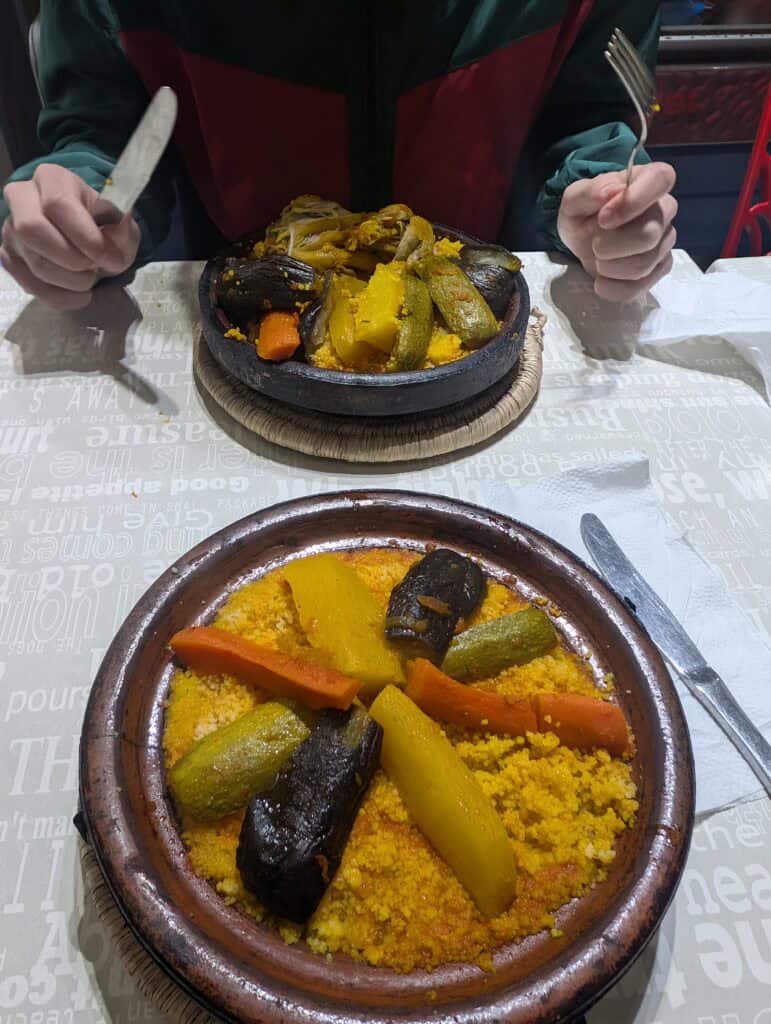
It’s also worth being cautious with raw foods and making sure bottled water is used rather than tap water.
That said, most travellers eat their way around Marrakech without any issues at all, and the food is well worth trying while you’re there – just use a bit of common sense, and you’ll be fine.
Solo Female Travellers in Marrakech
Marrakech is generally safe for solo female travellers, but it’s important to be aware that you may receive more attention than you’re used to.
Dressing modestly – loose clothing that covers your shoulders and knees – can help you blend in and avoid unwanted attention. Personally, I never experienced any catcalling during my visit, although I know it can be an issue for some women. The only attention I received was from market sellers asking if I wanted to buy something, which is very common and usually harmless.
Like in any busy city, it’s best to take sensible precautions. Try to stay somewhere that isn’t completely isolated, and stick to well-lit, busy streets – especially in the evening. Choosing accommodation with good reviews and arranging transport if you’re arriving late can make a big difference to how comfortable you feel.
Overall, many women travel to Marrakech alone without serious problems, and with a bit of awareness and confidence, it can be a very enjoyable destination to explore solo.
Conclusion: Is Marrakech Safe to Visit?
So, is Marrakech safe to visit? Absolutely – when you approach it with a bit of caution and cultural awareness.
The city’s energy, history, and beauty are well worth a visit, and with a few simple safety tips, you’ll be free to explore and soak up the unforgettable atmosphere without worry.
Embrace the adventure, respect the local customs, and prepare wisely – and Marrakech will welcome you with open arms.